
About
My story, so far
Farm boy, industrial engineer, consultant, father, photographer, student of Scripture — and now a seventy-year-old man building what he calls Dan 7.0.
If you and I were sitting across a table from each other — maybe with a cup of coffee — and you asked what I had been doing all these years, I’d probably laugh and say, “How much time do you have?”
I’ve lived long enough now to see several different versions of myself. The West Tennessee farm boy. The young worker learning how organizations really operate. The industrial engineer. The management consultant. The husband and father. The man who made mistakes and lived with regrets. The photographer who learned to watch the light. The student of Scripture.
The story makes more sense to me now than it did while I was living it. At the time, most of it seemed disconnected. Looking back, I can see the threads: curiosity, observation, problem-solving, faith, independence, and a persistent need to understand what’s actually happening beneath the surface.
I haven’t always used those gifts as wisely or as consistently as I wish I had. But the story is still being written.
1955 — 1973
A West Tennessee beginning
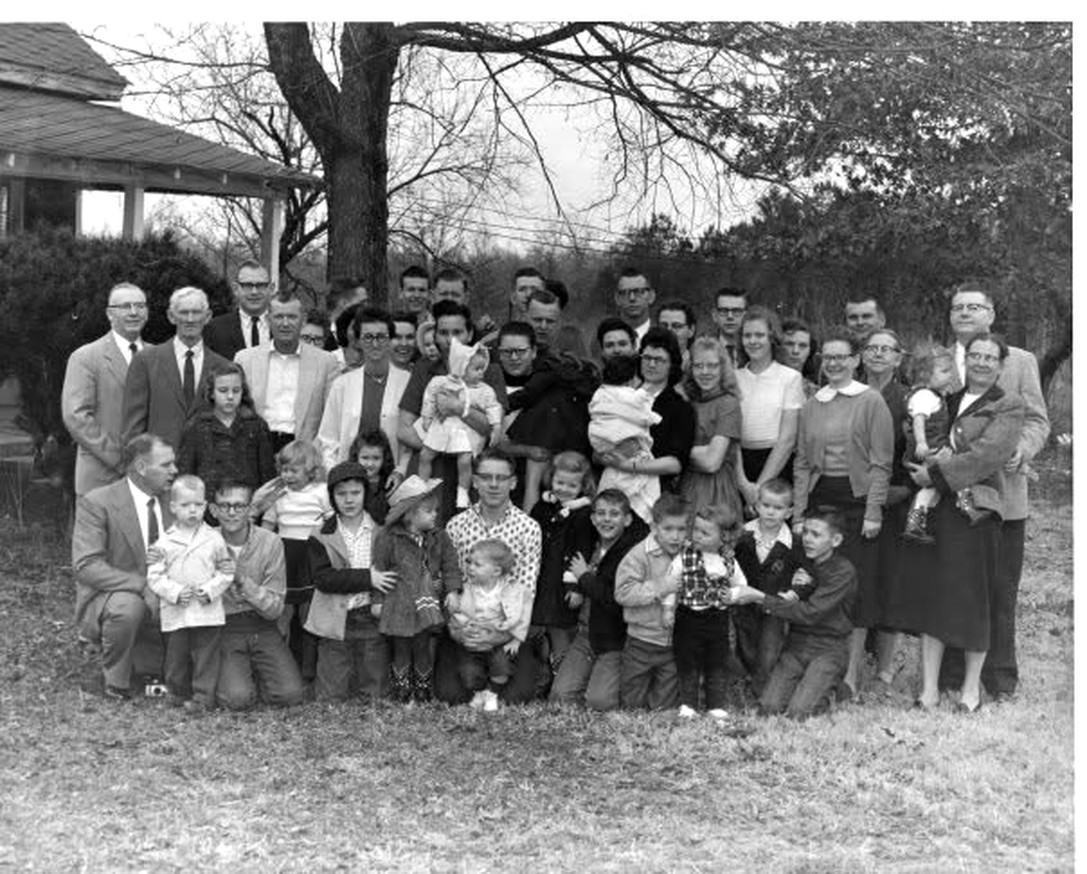
I was born in 1955 and grew up in rural West Tennessee, in a family connected to the land and the rhythms of farm life. My father was one of nine brothers, so “family” meant a yard full of people. Eisenhower was president. Television was still new in a lot of homes. We didn’t have one. Two years later the Soviets launched Sputnik, and America decided it had better get serious about science.
My childhood ran through one of the most turbulent stretches in modern American history. I was eight when Kennedy was assassinated — even children understood that something enormous and frightening had happened. The civil rights movement was changing the country. Vietnam was escalating.
But ordinary life kept going. The cows had to be milked, the chickens had to be fed, and the woodbox had to be filled. Farm life makes cause and effect impossible to argue with. Weather matters. Timing matters. Maintenance matters. You cannot talk a crop into growing and you cannot negotiate with the seasons. I suspect my lifelong interest in systems started right there.
In July of 1969, when I was thirteen, Apollo 11 landed on the Moon. The whole country stopped and looked in the same direction. Technology wasn’t science fiction anymore. Human beings had crossed a boundary that was supposed to be impossible. That feeling — that the world can change enormously inside one lifetime — never left me.
I started working in a grocery store around fifteen and stayed about four years. Show up. Pay attention. Serve the customer. Notice what needs doing. Understand that every task is connected to someone else’s work. Those lessons never really left either.
The 1970s
Learning work from the inside
After high school I went to work rather than following the conventional college-and-career path. My early years included time-and-motion study and industrial engineering — learning to observe how work actually moved. Not how the procedure manual claimed it moved, but how people, materials, decisions, delays, incentives, and habits combined on the floor.
Industrial engineering suited the way my mind works. I wanted to know why a process took as long as it did, why one department outperformed another, why small problems kept repeating. Numbers mattered. People mattered just as much. A process could be technically correct and still fail because leadership didn’t support it, or employees didn’t understand it, or the culture quietly rejected it.
1981 — 1998
Consulting, and a much larger world
I started consulting in the early 1980s and took assignments in Seattle, St. Louis, and Eagle Pass, Texas. For a young man from rural West Tennessee, that opened up an entirely larger world. Over the years the work took me to New York, Los Angeles, Toronto, Boston, Montreal, Puerto Rico, Santo Domingo, and a good many places in between.
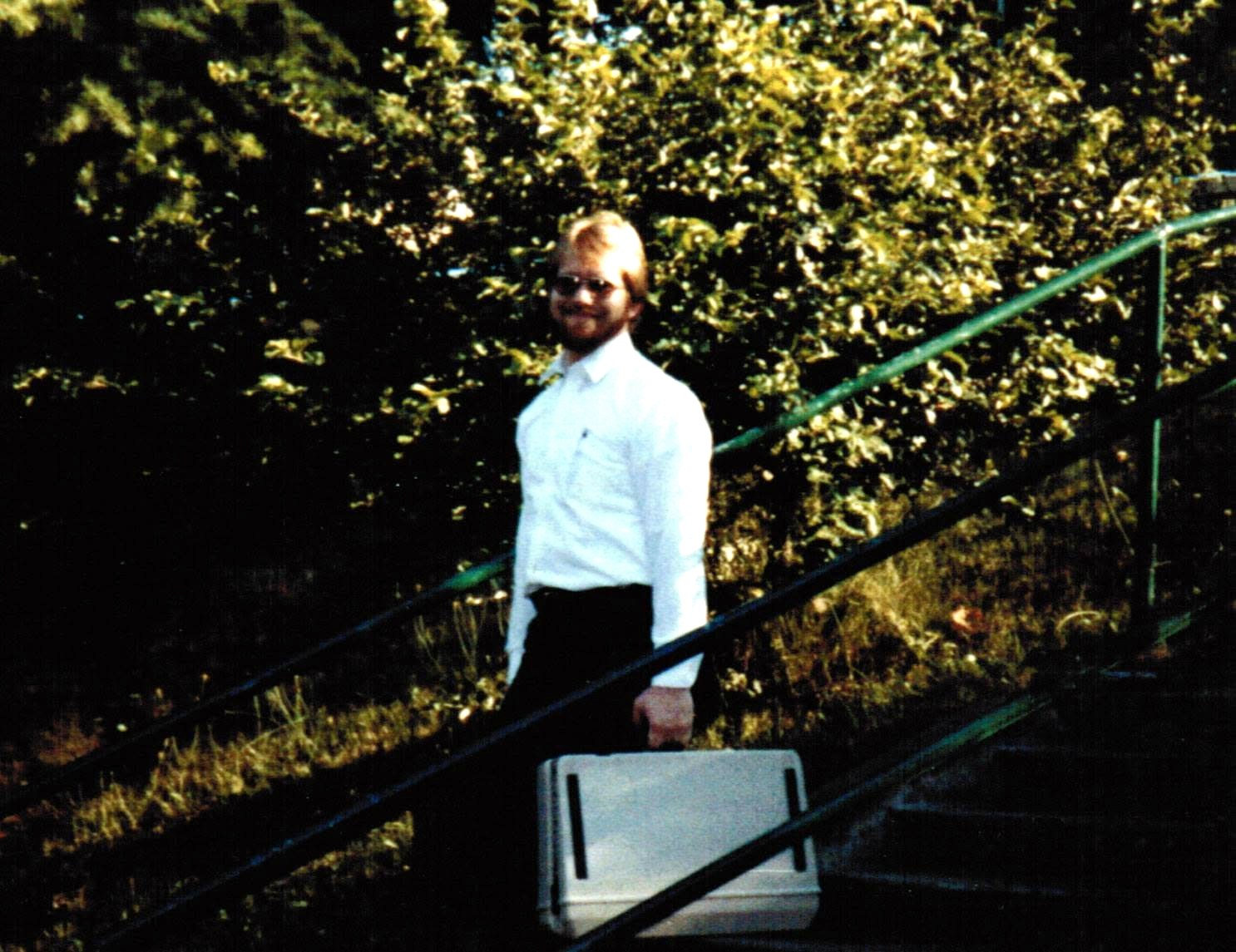
Consulting taught me to walk into an unfamiliar organization, listen carefully, observe without jumping to conclusions, and find the real problem. I worked with executives, managers, and operating teams on productivity, workflow, management systems, strategic planning, execution, and customer service. Eventually I was managing substantial assignments and multimillion-dollar projects.
The work confirmed something that has stayed central to my thinking ever since: two organizations can run essentially the same process and get completely different results. Leadership support, culture, discipline, communication, and follow-through usually decide whether a sound plan succeeds. The technical answer is rarely the whole answer.
There were accomplishments in those years. There were costs, too. Like a lot of people focused on work and responsibility, I didn’t always see in the moment what the pace and the choices were doing to the relationships that mattered most, or to the foundation I was building for later.
“Regret can teach me. It doesn’t get to name me.”
Dan Holland
1998 — 2010
Loss, change, and starting over
My mother died in 1992, while most of my working and family life was still moving at full speed. The years that followed brought a major rupture in my personal life, and a season of rebuilding that took considerably longer than I expected.
I don’t tell this part as a tidy redemption story, because real life is rarely tidy. There were painful consequences and there are things I’d do differently. Those years shaped how I think about relationships, forgiveness, time, and the damage that accumulates when important things are left unattended. That’s as much as belongs on a public page — the people in my life didn’t choose to have their history published, and it’s not mine to publish.
What I will say is that I met Cathy in 2002, and she has been an important part of my life for more than two decades. Ours has included love, distance, responsibility, caregiving, hard conversations, and the ordinary work of trying to understand another human being.
2011 — 2016
A heart, a camera, and a different way of seeing
In July of 2011 I had quadruple bypass surgery. A heart event turns an abstract idea — mortality — into something immediate and personal. Recovery became part of the story, along with a much sharper awareness of the consequences of habits accumulated over many years.
Around that same season, photography became more than a casual interest. In 2012, while photographing a sunrise at Old Hickory Lake, I had a moment I still remember as deeply spiritual. I sensed the Lord saying, Child, you are my favorite creation. I didn’t hear that as God valuing me above anyone else. I heard it as a revelation of how personally and completely God loves each of us.
In the summer of 2013, I met William Lee Golden of the Oak Ridge Boys while shooting sunsets at the lake. Watching him work taught me two things that reached well beyond photography. First, there’s usually a show after the show — the best light often comes once everyone else has packed up and gone. Second, remember to look behind you. You can get so locked onto the view you came for that you miss something extraordinary happening at your back.
Then, on the 17th of March 2016, I went to my first Clarksville Regional Open Shoot — CROS — and the whole thing turned again. Up to that point photography had been a solitary pursuit: me, a tripod, and whatever the sky decided to do. CROS was a monthly gathering of photographers, models, and hair and makeup artists, all of us there to practice, build a portfolio, and build a network.
I went to learn lighting. What I actually got was people. Ten years on I’m still friends with several of them, and the friendships have outlasted the club — CROS itself is no longer active. It’s the reason portrait work became a serious part of what I do.
Faith
From rules toward grace
Christian faith has been present my whole life, but my understanding of it has changed considerably. My background is a strong belief in the oneness of God, the message of Acts 2:38, the baptism of the Holy Spirit, and the continuing work of spiritual gifts. I still hold convictions that grew out of that foundation.
What has shifted is the center of gravity. I’ve moved from a heavily rule-centered understanding of holiness toward a much deeper understanding of grace. With time, I developed a much stronger relationship with God. I see Scripture not merely as information but as the living Word of God — something I can read many times over and still encounter freshly. I study seriously, though I make no claim to being a theologian or a Bible scholar.
Cathy passed along a line, attributed to Bill Johnson, that has become important to me: Never visit the past without the Holy Spirit. When I revisit my past alone, I fall into regret, accusation, or self-justification. When I invite the Holy Spirit into that visit, the past becomes a place of truth, grace, instruction, and healing.
That doesn’t erase regret. I have plenty — about education, about building a stronger network, about health and self-discipline, about relationships and opportunities not taken. But grace changes what regret is allowed to do. Regret can teach me. It doesn’t get to name me.
2026
Dan 7.0, and where I am now
By 2026 I was seventy years old, and something in me was changing. I began to recognize the management consultant, the executive thinker, and the writer in myself again. Job rank and professional identity aren’t the same thing.
Dan 7.0 is my operating system for this season — spiritual growth, personal life, relationships, health, work, estate and legacy, and a New Beginnings division covering consulting, writing, and photography. I re-established Holland Resource as an independent advisory practice, and I started writing seriously again.
I’m not presenting this as a victory lap or a reinvention fantasy. It’s a commitment to use what’s left more deliberately.
If there’s a single thread running through my story, it might be this: understand the problem, clarify what matters, and then move forward deliberately. I’ve spent much of my life helping organizations do that. At seventy, I’m applying the same discipline to my own.